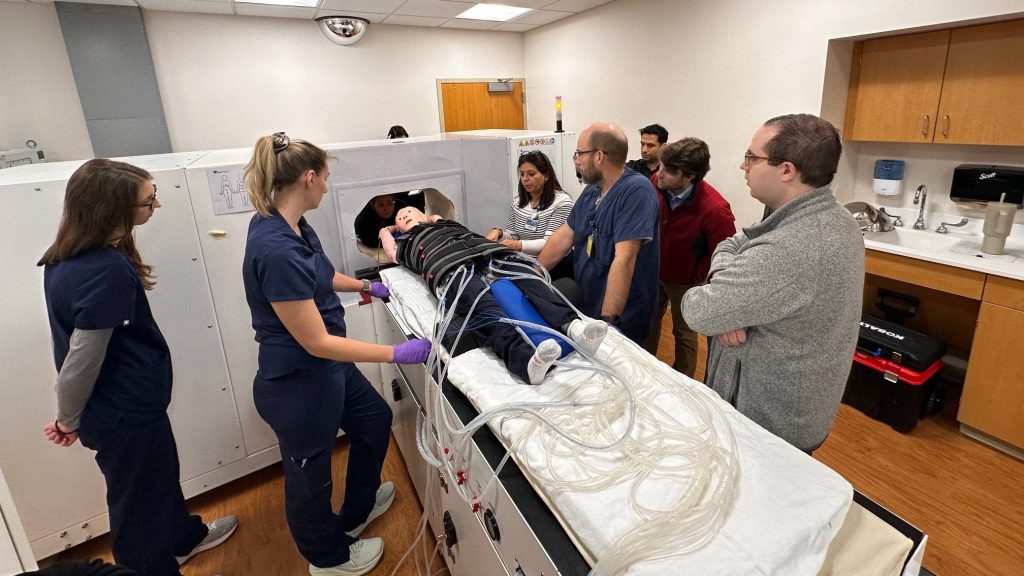
In a major milestone for cancer innovation, Mayo Clinic has installed the first magnetic nanoparticle-mediated hyperthermia system in the United States — opening a new chapter in investigational cancer treatment.
The system, developed in collaboration with New Phase Ltd., was installed in November 2025 at Mayo Clinic’s Radiation Oncology Department in Rochester, Minnesota. In December 2025, the first U.S. patient received treatment as part of a clinical trial.
-What makes this groundbreaking?
Hyperthermia — the use of heat to damage and kill cancer cells — has long been recognized as a potential “Achilles’ heel” of cancer. However, traditional methods have faced technological limitations.
This new investigational system uses:
- Iron oxide magnetic nanoparticles, administered via IV
- Electromagnetic induction technology to selectively heat tumors
- Controlled heating capped at 50°C to protect surrounding tissues
- Real-time monitoring and cooling systems to ensure patient safety
As Dr. Scott Lester explains, the technology works similarly to an induction cooktop — except instead of heating a pan, electromagnetic waves heat nanoparticles concentrated inside tumors.
– Why this matters
The current clinical trial focuses on patients with metastatic solid tumors (excluding brain tumors) whose cancers have proven resistant to multiple advanced therapies, including radiation.
This approach offers several promising advantages:
✔ Ability to target deep tumors
✔ Potential to treat multiple tumors simultaneously
✔ May enhance effectiveness of radiation and systemic therapies
✔ Could allow lower radiation doses with improved outcomes
Researchers hope hyperthermia could become the “fourth leg” of cancer treatment — alongside surgery, chemotherapy, and radiation.
– A return — with better technology
Two decades ago, hyperthermia showed promise when combined with radiation, but technological constraints limited its success. Today, advances in nanoparticle engineering and electromagnetic systems may finally unlock its full potential.
As Dr. Nadia Laack noted, this more advanced method could make hyperthermia widely available for patients with complex cancers — if clinical trials confirm its safety and effectiveness.
#Hyperthermia #ThermoOncology #CancerResearch #Oncology #MedicalInnovation #ClinicalTrials #HealthcareInnovation